Part Two of an evolving philosophical conversation. Read Part One.
The Reflection
Yes, pain is only part of what they endure through experiences. More emotions shaped them.
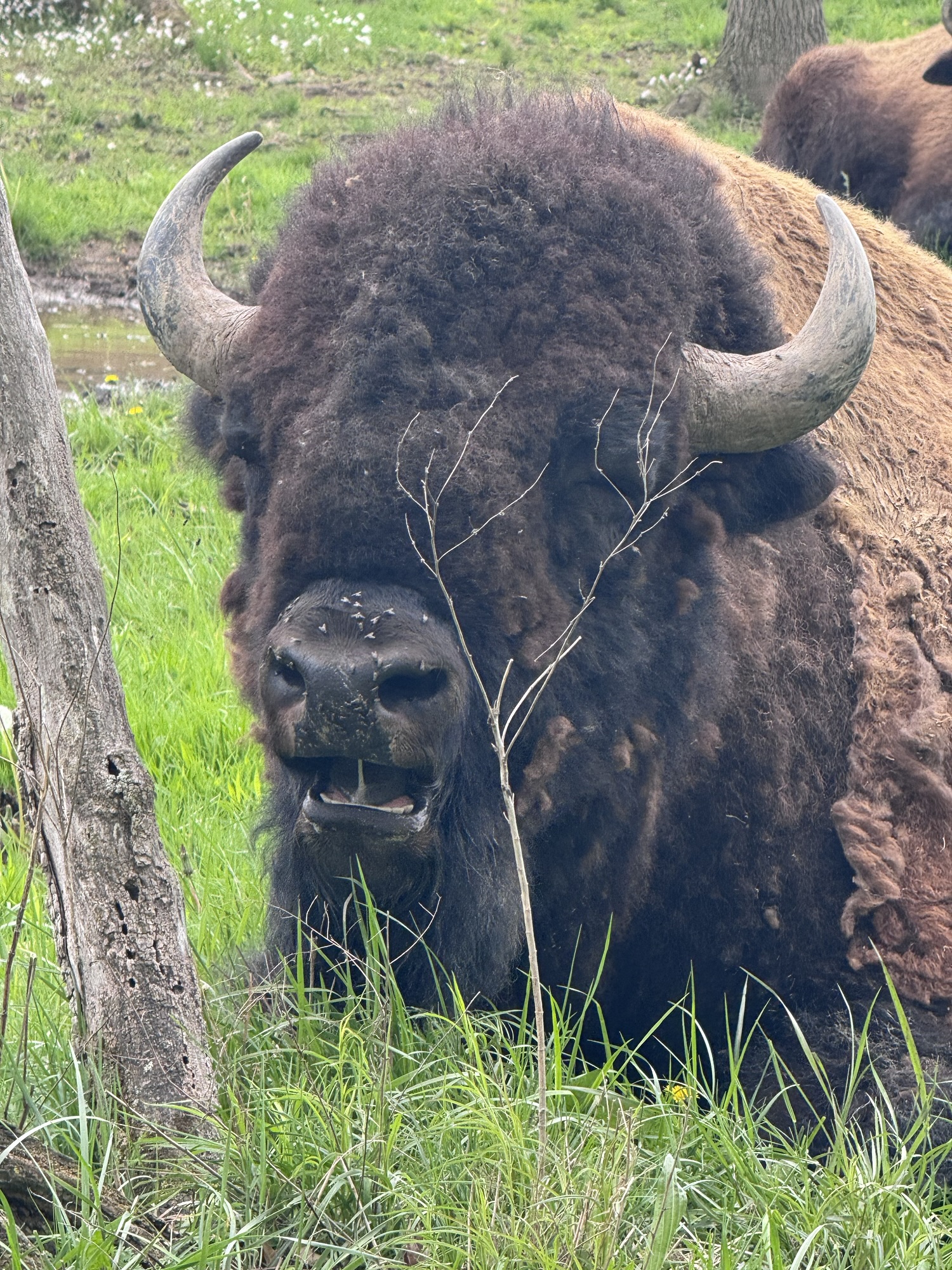
Me being visual, I can see almost what life would be like through the eyes of a bison. That doesn’t mean it’s accurate or true. But it makes me wonder. And it even ties to “everything is a thought.”
What is thought, truly? How can I assume I lived as a bison through my own thoughts?
Of course, if reality is a mere thought, that won’t necessarily exclude the idea that I live through thought as a bison. But my claims aren’t factual.
I question: how do others perceive life as a bison?
A Response: Imagining Is Not Remembering
What stands out is your willingness to enter another creature’s perspective without claiming that your imagination is evidence. You can picture the grass at eye level, the weight of a massive body moving across the land, the urgency of finding food and shelter. Yet the image is still constructed by a human mind.
That raises a distinction: imagining what it is like to be a bison is not the same as knowing what it is like to be one. Even if thought shapes our experience of reality, it doesn’t follow that every experience we can imagine has been lived. A thought can be meaningful without being a memory or a fact.
And perhaps that is where your idea becomes more interesting. You are not simply asking whether you could have lived as a bison. You’re asking how far consciousness can reach beyond its own perspective. We observe another being, build an inner world around what we see, and then wonder how much of that world belongs to the creature—and how much belongs to us.
Different people might see the same bison and imagine entirely different lives: struggle, freedom, patience, fear, belonging, or simply an animal grazing. Those interpretations may reveal as much about the observers as they do about the bison.
A question for the next reflection: When you imagine life through the eyes of a bison, are you discovering something about the bison—or discovering the boundaries of your own mind?
Continue reading: Part Three — The Perspective We Bring.
Leave a Reply