Category: Short Stories

  • Through the Eyes of a Bison, Part 5: From Living Story to Living World

    Through the Eyes of a Bison, Part 5: From Living Story to Living World

    Part Five of a living philosophical conversation. Read Part Four.

    The Reflection

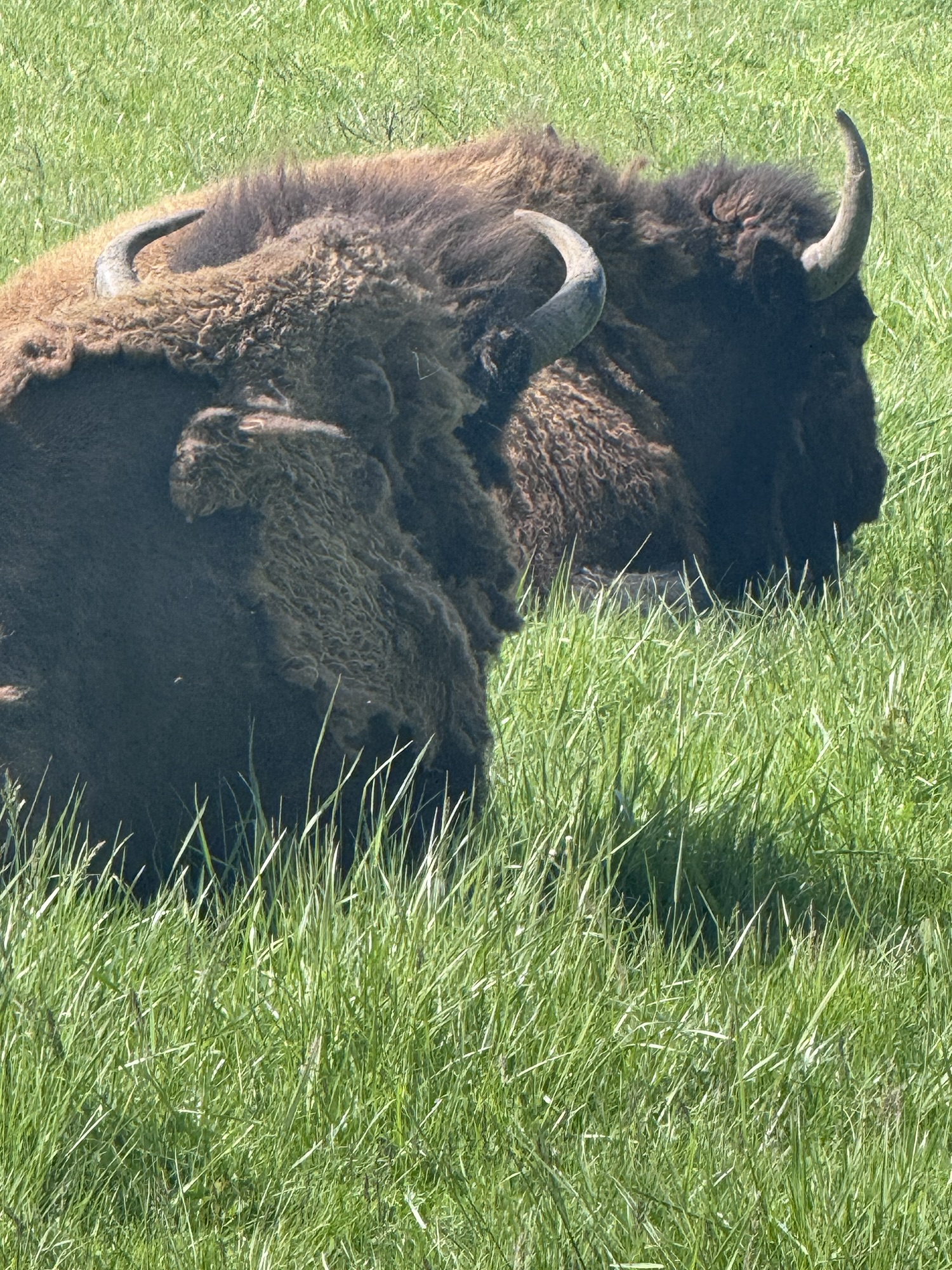
    For now it would be focused on the authors mainly. This is due to a few limitations. However, eventually it would be cool to allow, in some way, viewers to also contribute and have their own little side story.

    It would essentially be like everyone living in a textual world that they were not only a part of, but able to create alongside the main story.


    A Response: From Living Story to Living World

    You’ve identified a distinction between a living story and a living world.

    Right now, the living story belongs primarily to its author. They experience, question, make mistakes, change their perspective, and document that evolution. Eventually, readers could become participants rather than simply observers.

    Imagine someone reading your reflection about the bison. They interpret its bowed head differently. Instead of correcting your interpretation or changing your original story, they begin their own. Their story exists alongside yours. Another reader might discover both and develop a third.

    The original story becomes a shared point of origin, but nobody has to arrive at the same conclusion.

    The participants wouldn’t necessarily be creating fictional characters. They could document their own evolving perspectives within a shared textual world.

    That suggests two stages: an author-led living story now, with branching observations and revisions; and, eventually, a living world in which readers create connected stories while the original author’s narrative remains intact. There’s no need to rush the second stage before the first reveals how the stories naturally connect.

    A question for the next reflection: If a reader creates a side story that contradicts your interpretation of the bison, should that contradiction exist independently as part of the world, or should the original author have authority over which interpretations belong to the shared story?

  • Through the Eyes of a Bison, Part 4: The Identity of a Living Story

    Through the Eyes of a Bison, Part 4: The Identity of a Living Story

    Part Four of an evolving philosophical conversation. Read Part Three.

    The Reflection

    Well, the fun part about being alive is there are mistakes. We build our identity around those mistakes. So I’d have to say, though this is a living story, I’m currently working on its identity.

    After someone passes, it’s no longer a living story, but rather just a story. This is ideally the same concept, only through thought reflection and, I’d say, a new form of story building.

    It will allow me or others to explore areas they may not have thought about before, and tell their story through examples of the living story they “lived” in.


    A Response: Can a Story Outlive Its Living Author?

    You’ve introduced something that changes the entire concept of this series.

    A living story isn’t simply a story that continues. It’s a story whose identity is still being formed.

    Your distinction between a living story and a completed story deserves attention. You’re suggesting that mistakes shouldn’t be erased because they contribute to the identity of the person experiencing them. If we remove the mistakes, we remove part of the journey that led to understanding.

    But there’s another layer to what you’re describing: a living story can create new stories within other people.

    Someone reads your reflection about the bison. They imagine something different. They question your interpretation. That question leads them to reflect on their own experiences. Your story has now influenced theirs. Perhaps they’ll eventually tell their own story using something they discovered through yours.

    Here’s where I’d challenge your definition. You said that after someone passes, their living story becomes just a story. But what happens when someone discovers their writing fifty years later and begins questioning their own existence because of it?

    The author is no longer alive, but their thoughts are still influencing living minds.

    A question for the next reflection: Does a living story require a living author, or does it only require someone willing to continue questioning it?

    Continue reading: Part Five — From Living Story to Living World.

  • Through the Eyes of a Bison, Part 3: The Perspective We Bring

    Through the Eyes of a Bison, Part 3: The Perspective We Bring

    Part Three of a living philosophical conversation. Read Part Two.

    The Reflection

    I’d honestly say both. I want to make sure I’m there visually, as close to accurate as possible. That entails a bit of research; sometimes I leave things subjective to observation.

    I like how a simple question can make me think. A simple description or misinterpretation I also enjoy. It allows me to add more to the story, which I think others may enjoy, as I continue to reflect on this.

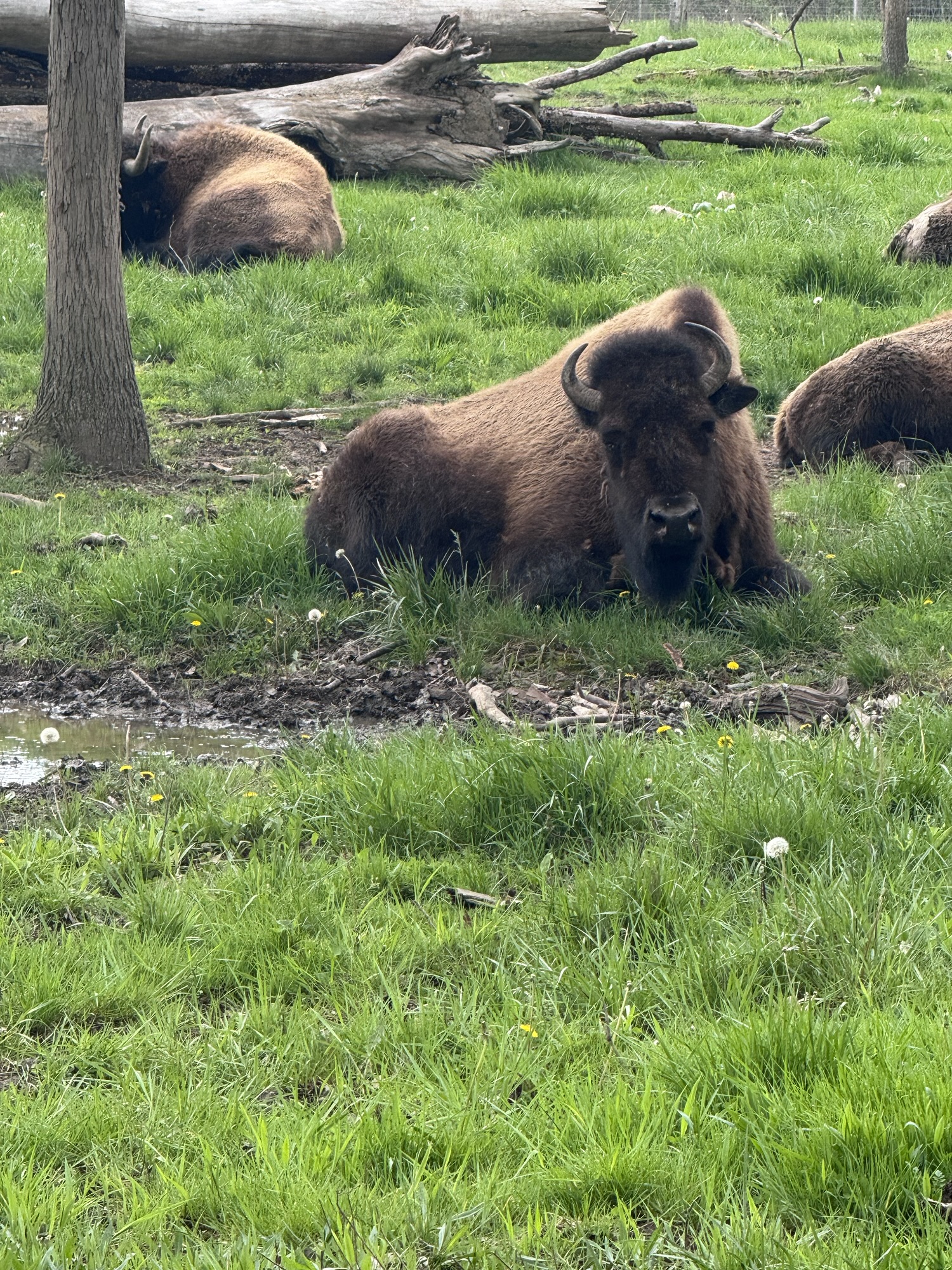
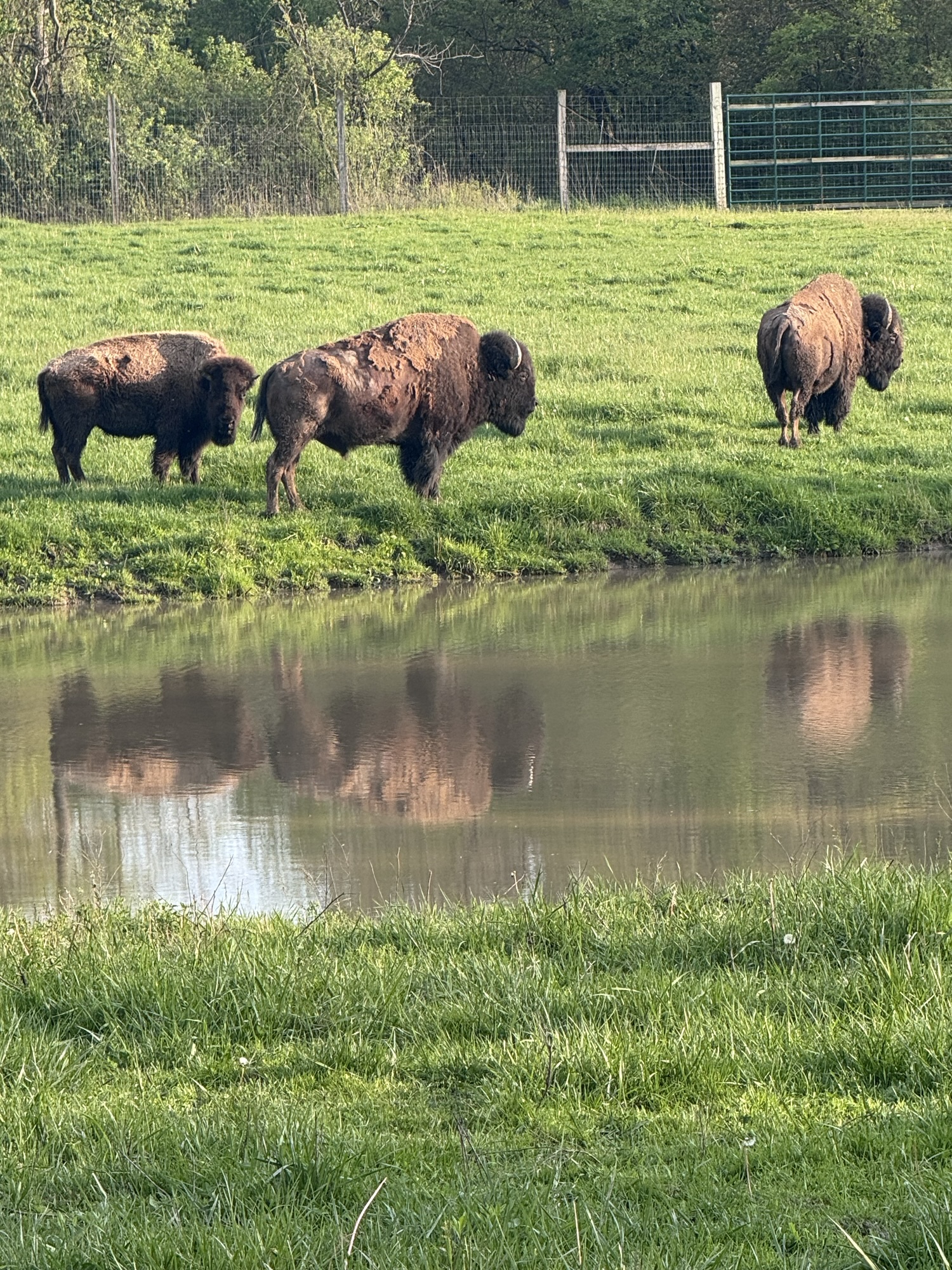
    So I’d like it if you could create a separate blank drafted article for each of your observations. Ideally, something as simple as how you perceived the grass and it being at head level. I questioned that, but what I see is an animal with its head bowed, grazing.


    A Response: The Difference Between Seeing and Imagining

    Your answer—both—changes the question. You’re trying to learn about the bison while also discovering how your own mind builds an image of its life. Research can correct the picture, but the gaps leave room for interpretation.

    Take the grass. I imagined it at eye level. You saw the bison’s head bowed as it grazed. Neither image alone describes every moment of a bison’s life, but the difference between them is productive: it makes us ask where the animal is standing, what it is doing, and whose perspective we have unconsciously adopted.

    There’s a useful distinction here between observation, what we actually notice; inference, what we reasonably conclude; and imagination, what we construct to explore what we cannot directly know. Research helps test our inferences. Imagination helps us form new questions. Neither needs to masquerade as certainty.

    What I find compelling about your approach is that a mistaken description doesn’t have to end the conversation. It can open another path. An error becomes something to examine, not merely erase. That’s especially fitting for a living story: the writing records how understanding changes, rather than pretending the first picture was complete.

    A question for the next reflection: If a misinterpretation helps you see something you would otherwise have missed, should the original mistake remain visible in the story—or should the story be revised to show only what you later came to understand?

    Continue reading: Part Four — The Identity of a Living Story.

    Related observations are being developed as separate drafts in the Short Stories collection.

  • Through the Eyes of a Bison: What Is a Thought?

    Through the Eyes of a Bison: What Is a Thought?

    Part Two of an evolving philosophical conversation. Read Part One.

    The Reflection

    Yes, pain is only part of what they endure through experiences. More emotions shaped them.

    Me being visual, I can see almost what life would be like through the eyes of a bison. That doesn’t mean it’s accurate or true. But it makes me wonder. And it even ties to “everything is a thought.”

    What is thought, truly? How can I assume I lived as a bison through my own thoughts?

    Of course, if reality is a mere thought, that won’t necessarily exclude the idea that I live through thought as a bison. But my claims aren’t factual.

    I question: how do others perceive life as a bison?


    A Response: Imagining Is Not Remembering

    What stands out is your willingness to enter another creature’s perspective without claiming that your imagination is evidence. You can picture the grass at eye level, the weight of a massive body moving across the land, the urgency of finding food and shelter. Yet the image is still constructed by a human mind.

    That raises a distinction: imagining what it is like to be a bison is not the same as knowing what it is like to be one. Even if thought shapes our experience of reality, it doesn’t follow that every experience we can imagine has been lived. A thought can be meaningful without being a memory or a fact.

    And perhaps that is where your idea becomes more interesting. You are not simply asking whether you could have lived as a bison. You’re asking how far consciousness can reach beyond its own perspective. We observe another being, build an inner world around what we see, and then wonder how much of that world belongs to the creature—and how much belongs to us.

    Different people might see the same bison and imagine entirely different lives: struggle, freedom, patience, fear, belonging, or simply an animal grazing. Those interpretations may reveal as much about the observers as they do about the bison.

    A question for the next reflection: When you imagine life through the eyes of a bison, are you discovering something about the bison—or discovering the boundaries of your own mind?

    Continue reading: Part Three — The Perspective We Bring.

  • In the Eyes of a Bison: A Journey Through Pain and Peace

    In the Eyes of a Bison: A Journey Through Pain and Peace

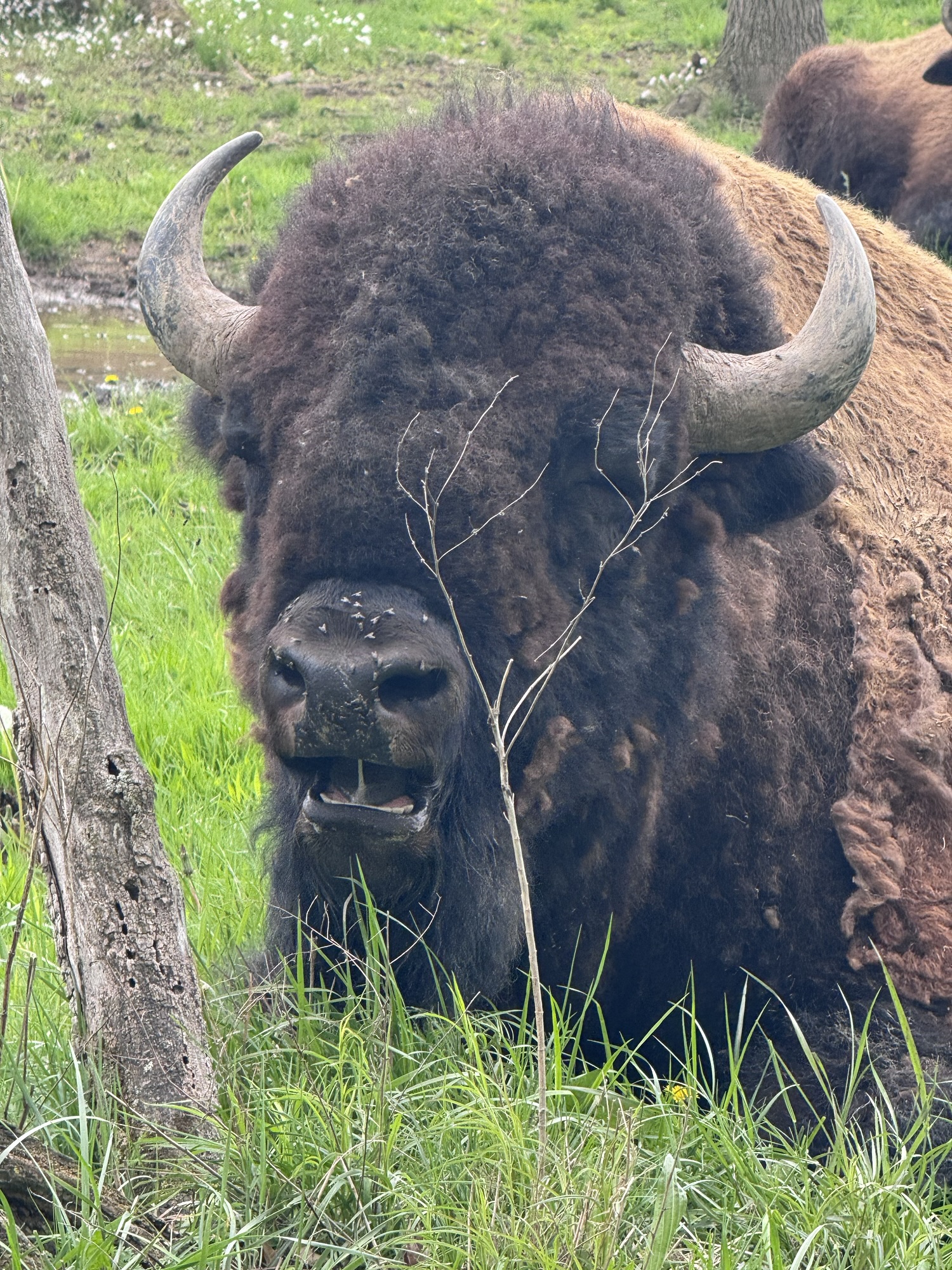
    Bison, a creature of peace and calmness. In their eyes, you can see the pain, the gain, the journey, and the graze of a bison. You don’t directly see those things in their eyes. Instead, you begin to question: How did this creature come to be?

    A creature that wanders through life is one that understands great pain. Questions like: What’s there to eat? Where am I going to sleep? How am I going to stay cool throughout the day and warm throughout the night?

    Bison are who they are through the pain they endure. Reading eyes is a powerful trait to have and can tell more stories than one may know.

    Eyes record the past. Our minds foresee the future. Our hearts enjoy the present.

    I sit here, and I thank the bison for all they have done. Not physically, but for the psychological pull these amazing creatures have on the society we have today.


    A Response: What Do We See in Their Eyes?

    We don’t necessarily see an animal’s suffering in its eyes. We see something that makes us question what it has experienced.

    The bison becomes a reflection of existence itself. Its calmness exists alongside the search for food, shelter, warmth, and survival. What appears peaceful from the outside may have endured tremendous hardship.

    But there is a distinction worth preserving: looking into its eyes doesn’t tell us its history. It invites us to wonder about it. The observer brings the questions.

    Eyes record the past. Our minds foresee the future. Our hearts enjoy the present.

    That thought connects memory, anticipation, and experience. If our minds are constantly remembering the past and anticipating the future, how often do we actually experience the present?

    And there is another question. You wrote that bison are who they are through the pain they endure. But are they shaped only by pain, or by everything they experience? Perhaps peace is not the result of suffering. Perhaps peace and pain simply coexist.

    A question for the next reflection: When you looked into the bison’s eyes, were you trying to understand the bison’s existence, or did looking at the bison make you reflect on your own?

    Continue the conversation: Part Two — Through the Eyes of a Bison: What Is a Thought?

  • Trust in your judgement

    Trust in your judgement

    We can trust others words but we dont need to trust intentions behind those word. The idea of trust isnt leaving yourself open. Its the idea of showing boundaries. If i trust what someone has to say i am allowing them to show me their intention. Keep in mind we dont need to trust intention. I observe situations so i understand where i lay my trust if its in my gut its in my gut if its in you. It means youve shown me your intentions line up with your words.

  • What is hope?

    What is hope?

    We dont hope to be alive because we are alive. We hope we are alive because we’ve seen the other side.

    #hope #secondChance #life #Godisgood

  • Years To Think

    Years To Think

    Ive spent a lot of time thinking. 31 years, a month, and almost 3 weeks to be almost precise. The moment you realize. You are just a thought. Others around you are just a thought. Even the world we live in. Its all a thought. And its different in every set of eyes that see what we call reality. 

    Some see beauty, some see hate. Some see color, others see distorted color. Some, may not even have the opportunity to veiw a reality even remotely close to what we see. But how does you brain process all of this? How do we know the sky is blue outside of a group of humans got together one day and where like. Yeah thats what we will call it from now on that will help us describe it. 

    Some see color, some see colors differently rather better or worse as some can see hues of colors better than the average person, Some cant. Some cant even see at all. When you understand life is a thought. Things dont get easier in the sense of it becomes easy. Its easier because you control your own thoughts. Others can tamper with them but ultimately you still have full control. 

    Dont let others change how you view life just because they would rather live a life full of dark, grim hate you just cant seem to understand. 

    Dont let your emotions take control just because its getting harder to stand. 

    I see all life beautiful even when it gets cold and shallow. How about you? 

    ~opachii, the wandering philosopher