Part Three of a living philosophical conversation. Read Part Two.
The Reflection
I’d honestly say both. I want to make sure I’m there visually, as close to accurate as possible. That entails a bit of research; sometimes I leave things subjective to observation.
I like how a simple question can make me think. A simple description or misinterpretation I also enjoy. It allows me to add more to the story, which I think others may enjoy, as I continue to reflect on this.
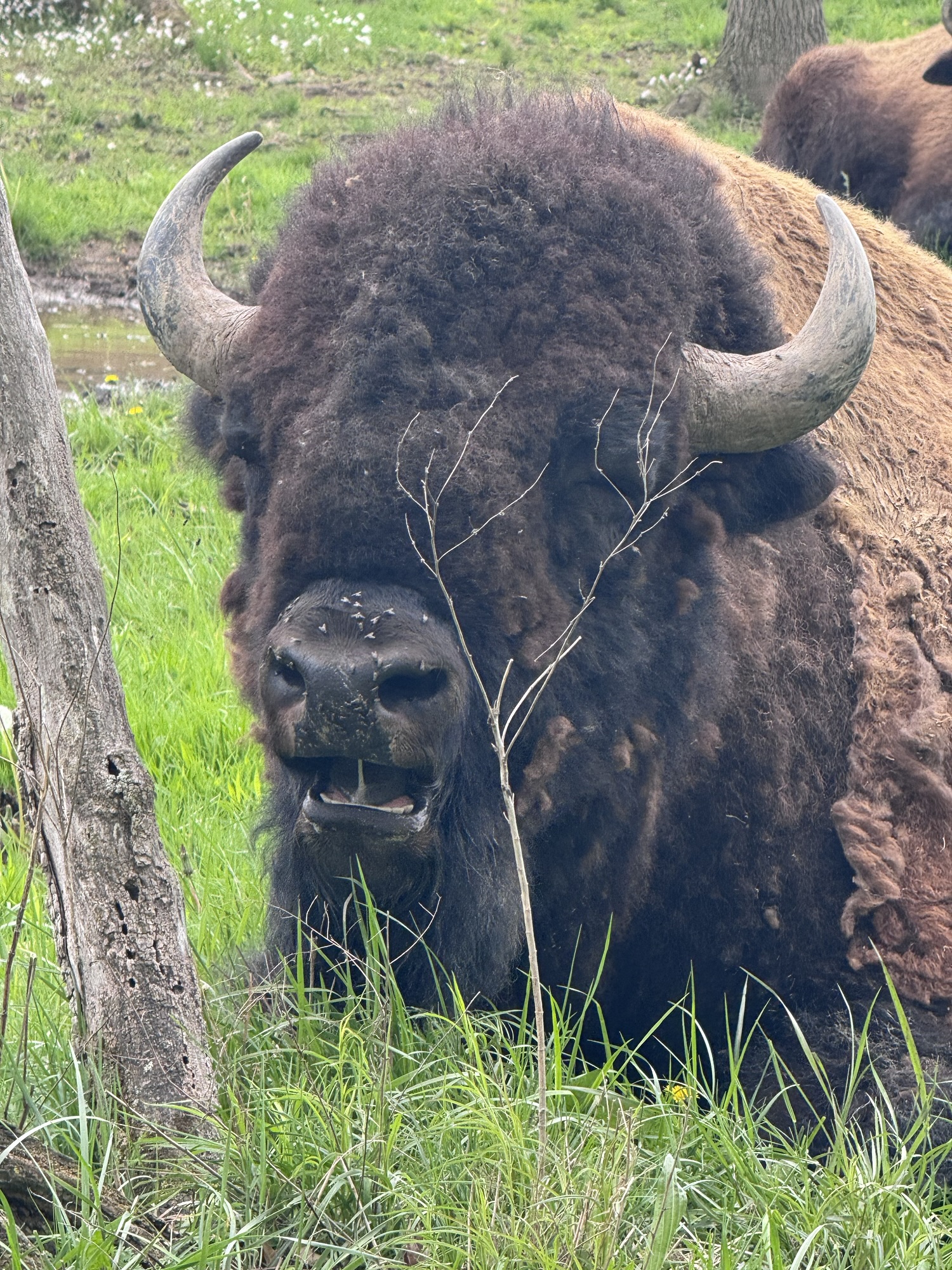
So I’d like it if you could create a separate blank drafted article for each of your observations. Ideally, something as simple as how you perceived the grass and it being at head level. I questioned that, but what I see is an animal with its head bowed, grazing.
A Response: The Difference Between Seeing and Imagining
Your answer—both—changes the question. You’re trying to learn about the bison while also discovering how your own mind builds an image of its life. Research can correct the picture, but the gaps leave room for interpretation.
Take the grass. I imagined it at eye level. You saw the bison’s head bowed as it grazed. Neither image alone describes every moment of a bison’s life, but the difference between them is productive: it makes us ask where the animal is standing, what it is doing, and whose perspective we have unconsciously adopted.
There’s a useful distinction here between observation, what we actually notice; inference, what we reasonably conclude; and imagination, what we construct to explore what we cannot directly know. Research helps test our inferences. Imagination helps us form new questions. Neither needs to masquerade as certainty.
What I find compelling about your approach is that a mistaken description doesn’t have to end the conversation. It can open another path. An error becomes something to examine, not merely erase. That’s especially fitting for a living story: the writing records how understanding changes, rather than pretending the first picture was complete.
A question for the next reflection: If a misinterpretation helps you see something you would otherwise have missed, should the original mistake remain visible in the story—or should the story be revised to show only what you later came to understand?
Continue reading: Part Four — The Identity of a Living Story.
Related observations are being developed as separate drafts in the Short Stories collection.