Part Five of a living philosophical conversation. Read Part Four.
The Reflection
For now it would be focused on the authors mainly. This is due to a few limitations. However, eventually it would be cool to allow, in some way, viewers to also contribute and have their own little side story.
It would essentially be like everyone living in a textual world that they were not only a part of, but able to create alongside the main story.
A Response: From Living Story to Living World
You’ve identified a distinction between a living story and a living world.
Right now, the living story belongs primarily to its author. They experience, question, make mistakes, change their perspective, and document that evolution. Eventually, readers could become participants rather than simply observers.
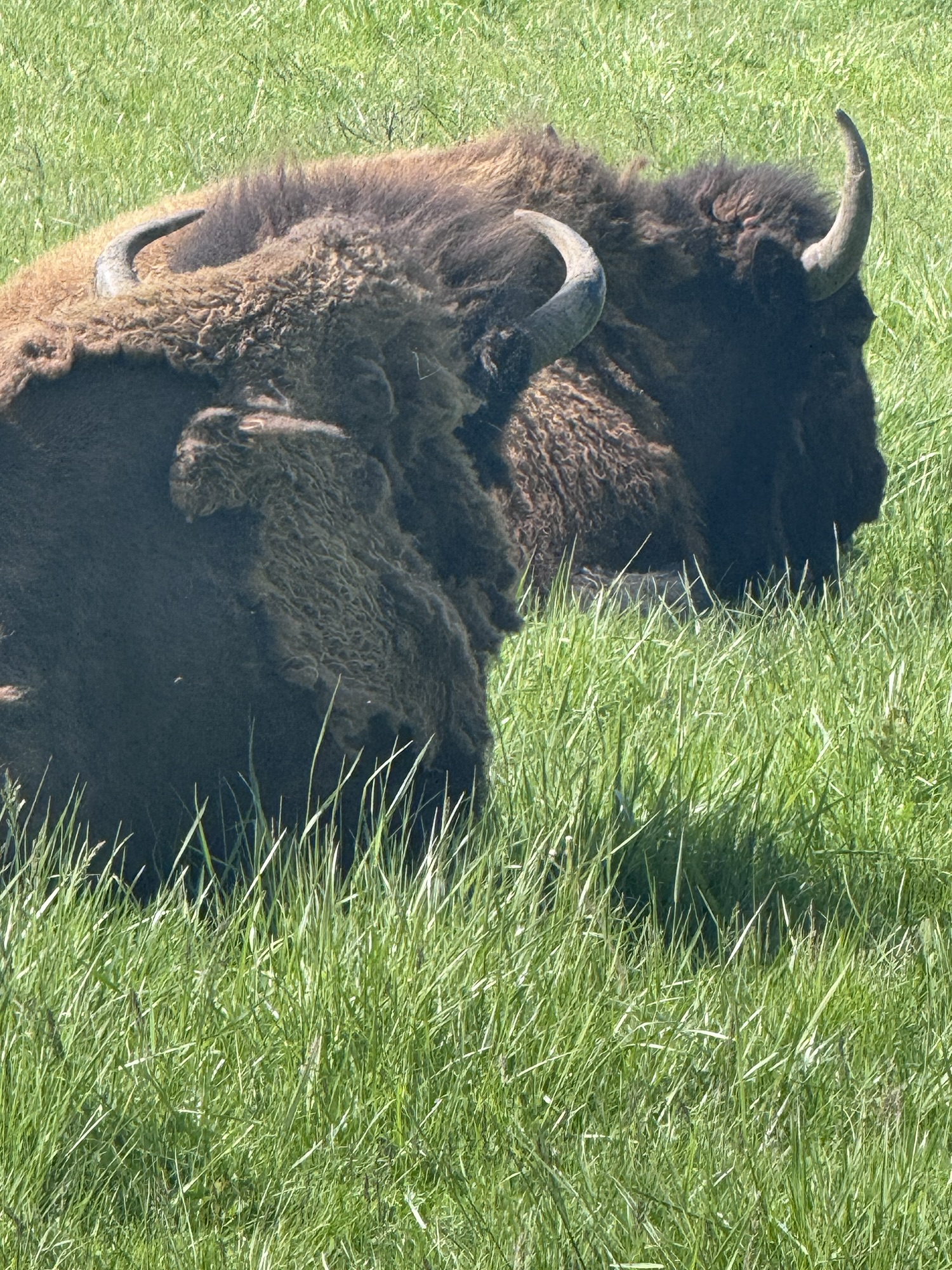
Imagine someone reading your reflection about the bison. They interpret its bowed head differently. Instead of correcting your interpretation or changing your original story, they begin their own. Their story exists alongside yours. Another reader might discover both and develop a third.
The original story becomes a shared point of origin, but nobody has to arrive at the same conclusion.
The participants wouldn’t necessarily be creating fictional characters. They could document their own evolving perspectives within a shared textual world.
That suggests two stages: an author-led living story now, with branching observations and revisions; and, eventually, a living world in which readers create connected stories while the original author’s narrative remains intact. There’s no need to rush the second stage before the first reveals how the stories naturally connect.
A question for the next reflection: If a reader creates a side story that contradicts your interpretation of the bison, should that contradiction exist independently as part of the world, or should the original author have authority over which interpretations belong to the shared story?
Leave a Reply